
Healthy Nutrition During Ramadan
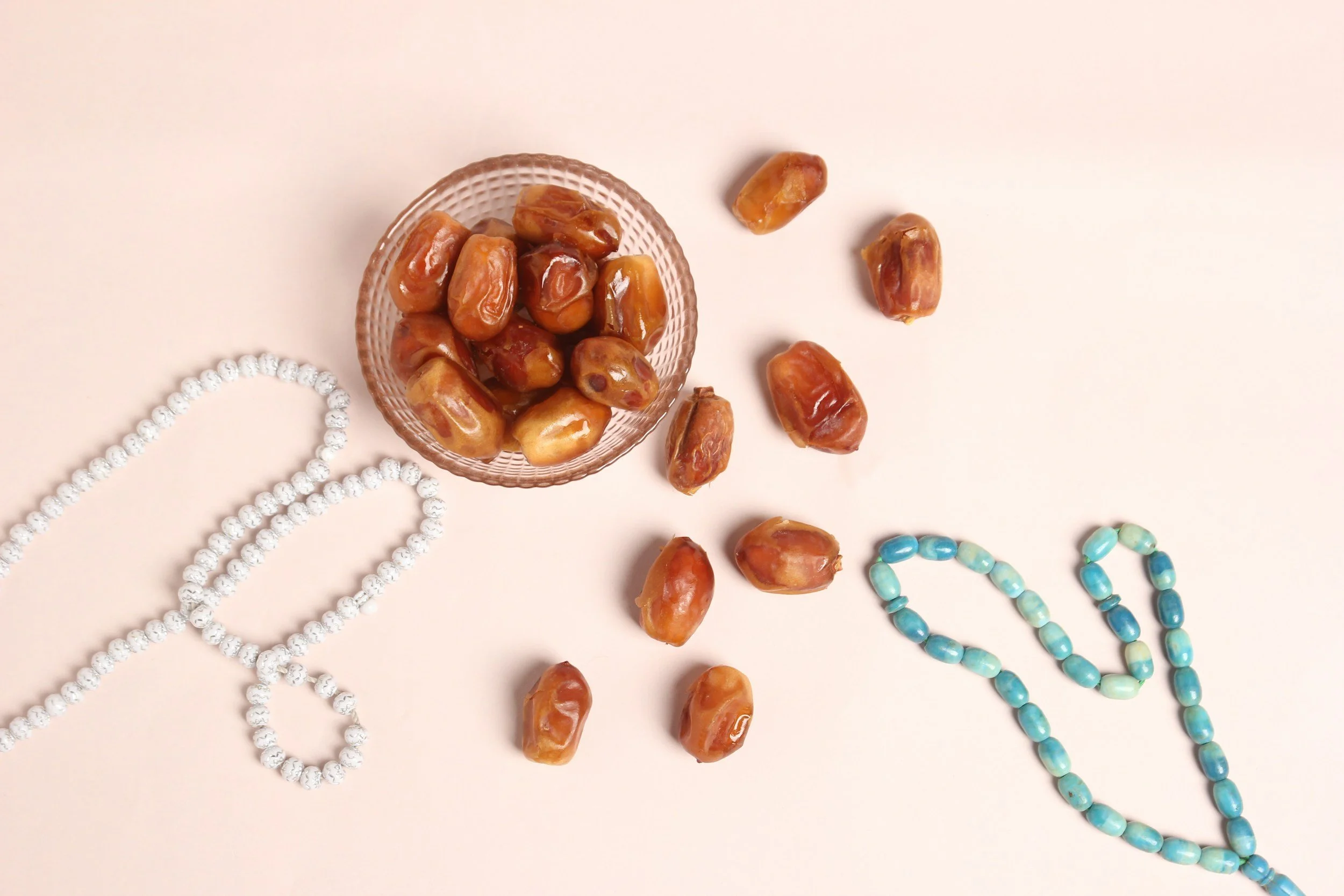
Healthy eating in Ramadan
A Practical, Science-Based Guide from a Clinical Dietitian.
Ramadan fasting is a powerful spiritual practice, but it also places real physiological demands on the body.
Long fasting hours, altered sleep, and changed meal timing all affect blood sugar control, hydration status, digestion, and energy levels.
When nutrition is poorly managed, people often experience fatigue, headaches, bloating, weight gain, or worsening of medical conditions.
When it is done properly, Ramadan can improve metabolic health and reset eating habits.
What Happens to Your Body During Ramadan Fasting
During the fasting period, the body first uses stored glucose from the liver and muscles.
Once depleted, it shifts to using fat as a fuel source.
This metabolic switch is normal and safe for healthy individuals.
However, fasting also affects blood sugar regulation, hydration, circadian rhythm, and digestion.
Evidence-Based Benefits of Ramadan
Fat loss and weight loss
Improved lipid profile
Lower blood pressure
Improved insulin sensitivity.
These benefits depend heavily on food quality, portion control, hydration, and activity levels.
Common Problems During Ramadan
Poor food choices can lead to headaches, dizziness, bloating, reflux, fatigue, and weight gain. These issues are usually related to dehydration, excess fried foods, sugary drinks, and large portions.
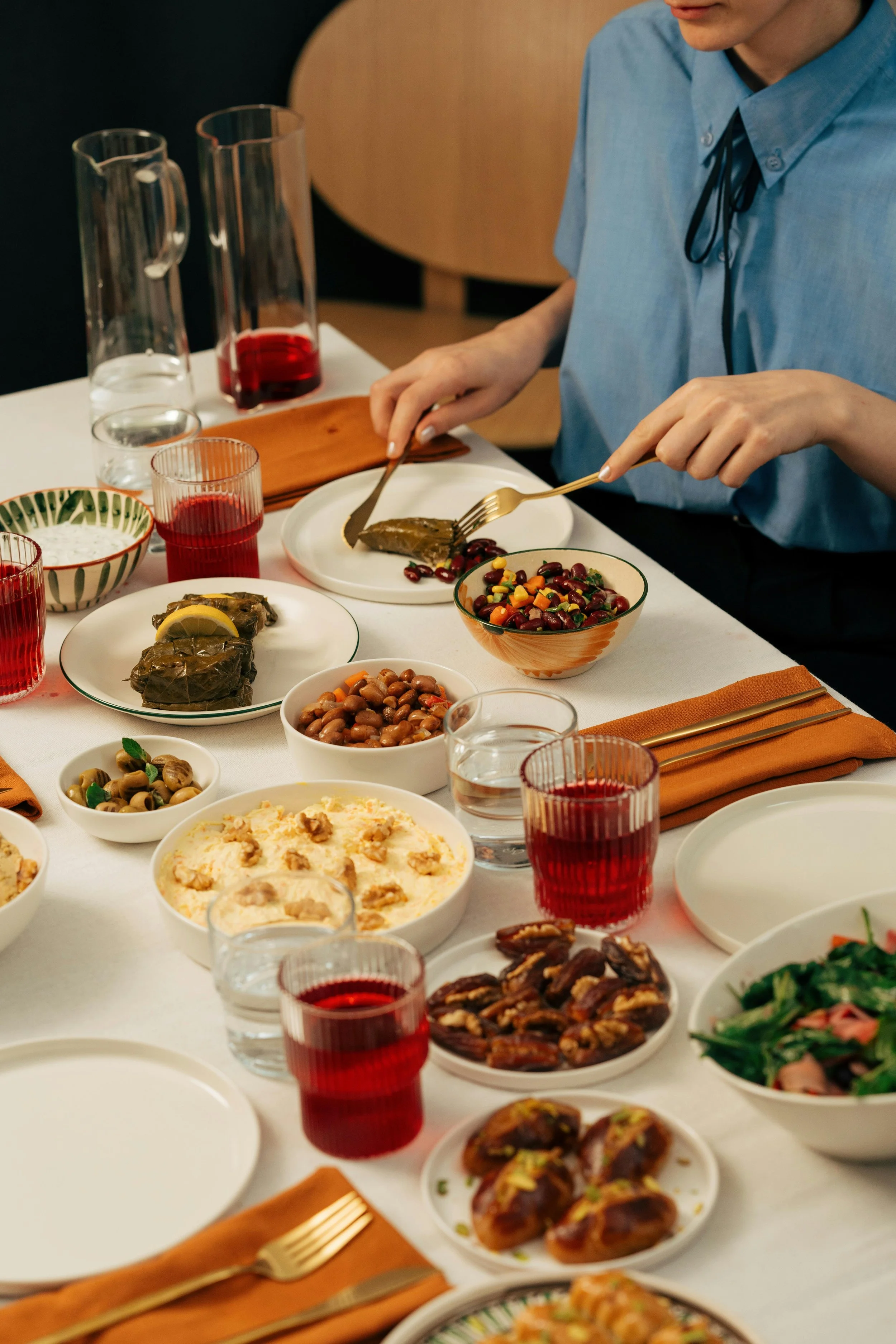
Iftar Structure
Start with water and 2–3 dates, followed by soup and salad. Limit the oil and cream used.
Use the air fryer for your appetizers, sambosa, kibbeh, and spring roll.
Divide your plate into 1/4 carbohydrates, 1/4 protein, and 1/2 a stew that includes vegetables.
Example: 1/2 -1 cup cooked rice + 100g-150g grilled chicken/fish + 1-2 cups of cooked okra, spinach, or salona.
Stop eating when 80% full.
Desserts
Who doesn’t love dessert in Ramadan?
I am going to tell you how to eat dessert without affecting your health.
Skip juices and traditional drinks that are full of sugar.
Choose fruit salad if you want.
Sugar-free syrups are always a good alternative.
Share your dessert with your family/dessert.
Choose fruit most days. Avoid juices.
Suhoor
Do not SKIP your Suhoor.
Suhoor is essential.
Think of it as a plate that will give you fuel for the next day.
It should be hydrating (high water vegetables and fruits: cucumber, watermelon, tomato, strawberries).
It should have complex carbohydrates (long-lasting energy source: oats, sourdough, quinoa, sweet potato, beans)
And do not forget the proteins (yogurt, chicken, low-salt cheese, milk, labneh, fish)
Hydration
Aim for one glass of water every one hour between Iftar and Suhoor.
Exercise
Light walking and light weights before iftar.
Heavy weights and classes after iftar.
One Day Sample
Iftar: Water, dates, lentil soup, fattoush salad, grilled chicken with vegetables, and rice.
Dessert: sugar-free jello with fruits.
Suhoor: Oat with Greek yogurt, chia seeds, and berries OR omelette with spinach, tomato, and sourdough bread.
